


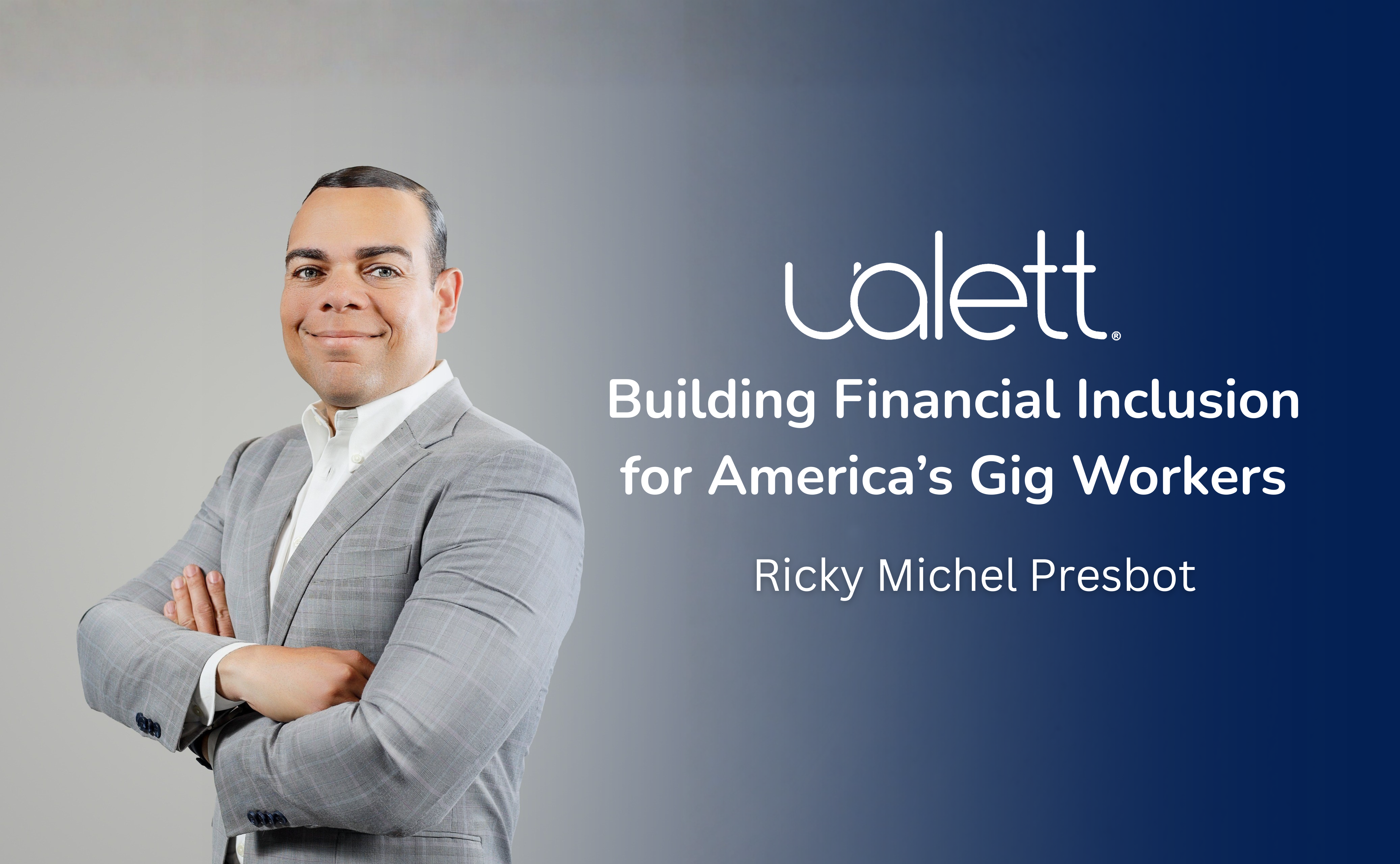
In today’s rapidly evolving economy, millions of independent workers power the gig sector—from rideshare drivers to delivery professionals—driving flexibility and productivity across industries. Amid this transformation, one fintech company stands at the forefront of financial empowerment: Ualett. At its helm is Ricky Michel Presbot, a Dominican-born entrepreneur whose vision for inclusion has reshaped how non-traditional workers access capital.
As Co-Founder and CEO of Ualett, Ricky combines entrepreneurial grit with a purpose-driven mission—to deliver transparent, responsible, and agile financial tools tailored to gig workers’ needs. With more than two decades of experience in business development and strategic leadership, he has refined a leadership style that balances big-picture thinking with actionable precision.
Under Ricky’s guidance, Ualett has emerged as a category-defining fintech platform, recently securing a $150 million debt facility to expand its impact nationwide. Built as a bilingual financial ecosystem, the company serves as a trusted ally for workers who often fall outside the reach of traditional financial systems. In this in-depth interview with CapitalInsightHub.com, Ricky Michel Presbot opens up about his entrepreneurial roots, his approach to inclusive innovation, and how Ualett is building a sustainable pathway to financial empowerment for America’s gig workforce.
Welcome, Ricky Michel Presbot, Co-Founder and CEO of Ualett
Q1. Ricky, thank you for joining us. Let’s start at the beginning—what inspired you to create Ualett and focus specifically on financial services for gig workers?
RMP: The spark came from a simple but powerful realization: gig workers, despite being essential to our modern economy, were invisible to the traditional financial system. In 2018, my co-founders and I came together over coffee, each bringing a different perspective finance, tech, and strategy but united by the same frustration. We saw how rideshare drivers, delivery couriers, and freelancers were left to fend for themselves financially, often resorting to predatory alternatives.
Ualett was built to challenge that norm. We didn’t start with a pitch deck; we started in the streets of New York, handing out flyers, talking to workers face-to-face, and building something that reflected their real needs. That grassroots DNA still defines us today. Ualett isn’t a top-down fintech experiment, it’s a community-first movement built on trust, transparency, and technology.
Q2. The gig economy has grown tremendously in recent years. From your perspective, what are the biggest challenges gig workers face when accessing financial support or traditional credit?
RMP: The biggest hurdle is systemic: the financial system wasn’t built for non-traditional earners. Gig workers often have variable income and don’t fit neatly into credit models. Traditional institutions view them as high risk, not because they are, but because the models in use are outdated.
This creates a paradox: the people driving our modern economy are the least served by it. Most financial products are rigid and exclusionary. At Ualett, we take a different approach, one based on real-time earnings data, not credit scores. That allows us to offer flexibility without compromising on risk management. We see the person behind the app, not just their financial profile.
User Base Across Diverse Communities
Q3. Ualett operates as a bilingual platform. How has that focus enhanced accessibility and trust among your user base across diverse communities?
RMP: Language is a gateway to trust. Many of our users come from Latino and immigrant communities, where English might not be the first language. By offering a fully bilingual app, support, and outreach experience, we’re not just removing a barrier, we’re affirming dignity.
Our WhatsApp-based outreach and bilingual education help us proactively address concerns and reduce confusion or default risks. This isn’t a feature; it’s part of our identity. Being culturally fluent has allowed us to build deep, lasting relationships with our users. It also positions us to grow in a way that’s inclusive and truly community-centered.
Q4. You’ve built companies across different industries over the years. What core leadership principles have guided your approach to scaling Ualett into a category-defining fintech?
RMP: Across every company I’ve built, my leadership has been guided by a few core principles: build on talent, operate on facts, and execute with purpose. I’ve always believed that real progress comes from empowering capable people and trusting them to solve real problems, not relying on theory, but on evidence, data, and lived experience.
Those principles are the backbone of how we’ve scaled Ualett into a category-defining fintech. We focus on creating solutions that serve the full 360° of the gig worker’s financial life, removing obstacles so they can focus on growing their businesses and pursuing their dreams.
By staying grounded in talent, truth, and execution, Ualett has become more than a platform. It is a movement reshaping how financial services meet the needs of gig workers, and we are building it with the durability and focus required to last.
Accelerating Growth and Product Innovation Roadmap
Q5. Let’s talk about this latest milestone—the $150 million debt facility. How will this funding accelerate Ualett’s growth and product innovation roadmap?
RMP: This facility is transformative. It gives us the financial agility to serve thousands more gig workers with the same speed and trust we’re known for. But more importantly, it fuels our evolution. With this facility we have been able to rapidly accelerate the expansion of our core financial services to independent workers across all of the United States. Our growth fuels innovation, and it allows us to deepen our support of gig workers throughout their financial journey. We recently hired a world class VP of Product to accelerate building and developing new tools that support income stability, financial planning, and long term growth.
We are moving toward a more complete financial ecosystem for the gig economy, one built around flexibility and inclusion. This funding positions us to create the next generation of solutions that help independent workers manage and grow their financial lives with confidence.
Maintaining Equilibrium Between Regulatory Compliance and Risk Management
Q6. Many fintechs struggle to balance speed with regulatory compliance and risk management. How does Ualett maintain that equilibrium while staying customer-centric?
RMP: From day one, we’ve chosen to grow responsibly. Our underwriting engine is built on real-time, verified income, not assumptions. On the compliance side, we embrace it. We don’t see regulation as a burden, we see it as essential to building a lasting company. Our model is MCA-based (merchant cash advance), which is structurally different from lending. We proactively educate stakeholders and regulators to clarify that distinction.
Q7. Ualett positions itself as a “financial ally” to independent workers. Could you expand on how this philosophy translates into product design and customer experience?
RMP: We never wanted to be just another app on a phone, we wanted to be a partner in our users’ financial journeys. That’s why we’ve focused on frictionless onboarding, flat transparent pricing, and fast access to funds. But it goes deeper: we offer preventative support to help users avoid financial pitfalls, not just react to them.
Being a financial ally means designing for real lives. It means ensuring a driver with an unexpected car repair can still make rent, or a delivery worker can keep up during a slow week. Our roadmap includes tools that help users not just access cash but build credit, save smarter, and plan ahead.
Contributing to Broader Economic Equity or Workforce Empowerment
Q8. Looking beyond financial services, do you see opportunities for gig platforms like Ualett to contribute to broader economic equity or workforce empowerment?
RMP: Absolutely. Financial inclusion is just the beginning. Gig workers often lack access to benefits, credit-building tools, or even basic tax support. Ualett can be a launchpad for a new kind of worker empowerment, one that acknowledges the realities of gig work and builds infrastructure around it. That’s how we see our role in creating economic equity: not by retrofitting old systems, but by designing new ones for the future of work.
Values, Resilience, and Leadership Approach
Q9. As a Dominican entrepreneur leading a U.S.-based fintech, how has your cultural background shaped your values, resilience, and leadership approach?
RMP: My Dominican roots have been my compass. They taught me resilience, warmth, and the power of community, which are values that shape my leadership and fuel the vision behind our fintech. Combined with our core philosophy, Believe, these roots gave us the conviction to build something meaningful in the U.S.: a company that truly understands Latino gig workers because we come from the same lived experience.
For the past seven years, Believe has guided us as we fill a deep financial gap for this community, becoming a bridge between cultures and a testament to what’s possible when purpose, identity, and faith in our people come together.
Q10. What’s your long-term vision for Ualett—both as a company and as a catalyst for inclusive financial innovation globally?
RMP: Our long-term vision is to be the most trusted financial ally for independent workers, meeting them where they are and evolving alongside their needs. We see an opportunity to redefine how financial services engage with this essential workforce. The challenges gig workers face are often universal: volatility, exclusion, and limited access to traditional systems. At Ualett, we’re solving these challenges with discipline, empathy, and technology that puts people first.
Leadership Grounded in Purpose and Precision
As fintech reshapes the financial landscape, Ricky Michel Presbot stands as an example of leadership grounded in purpose and precision. Through Ualett, he has turned a simple yet profound idea—fair, fast financial access for all—into a thriving technological reality that empowers thousands of independent workers nationwide.
From celebrating community resilience to fostering sustainable growth, Ricky’s mission extends far beyond business success. It’s a blueprint for how fintech can serve humanity, bridge opportunity gaps, and create inclusive systems that honor both ambition and dignity. As Ualett expands its reach and capabilities, its impact will continue to echo across the evolving fabric of the gig economy—proving that innovation, when rooted in empathy, can transform entire ecosystems.